Picking out new glasses can feel harder than it should. You’re standing in front of rows of frames, none of which tell you whether they’ll actually hold up to full days of screens, textbooks, and chasing kids around the house.
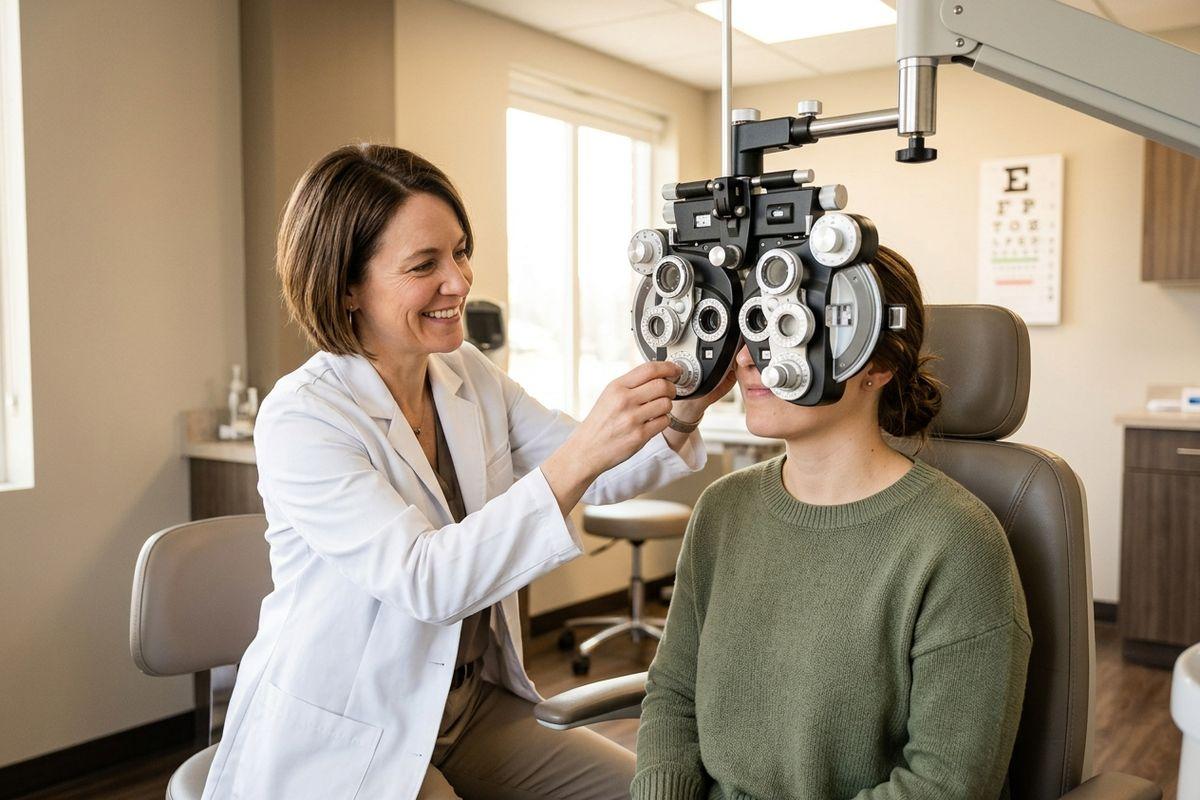
That’s where working with your optometrist pays off. Buying your glasses from your optometrist means your frames and lenses are selected with more than just your prescription in mind. Your prescribing optometrist is familiar with your ocular health, visual needs, and any factors that may affect how you see, which can play an important role in choosing lenses that maximize your vision and comfort. Your optical team can then use that information to help you find the right frame and lens options for your individual needs.
Personalized Service That Actually Knows You
Between reading, screen time, and full days on your feet, your glasses need to keep up with a lot. Shop with an optometrist, and the care you get fits the way you actually live.
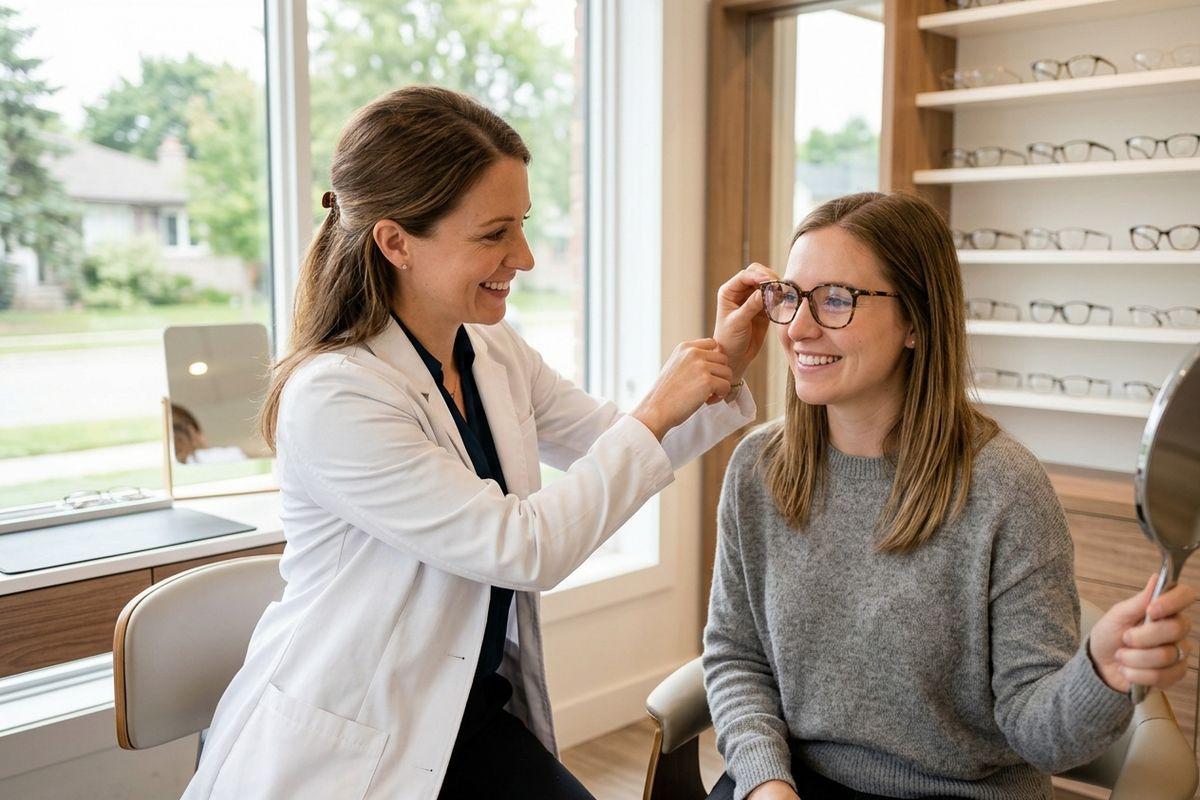
Your optical team gets to know your habits, your prescription, and the little things that bug you about your current pair. That means frame picks matched to your style, not whatever’s sitting on the nearest shelf.
Walk out with glasses chosen for you. Not just sold to you.
Getting the Fit Right the First Time
Even a small measurement gap can leave your glasses feeling off. Buying from an optometrist helps you avoid that problem before it starts.
Precise Lens Measurements
Your eyes sit a specific distance apart, and your lenses need to line up with them exactly. Your optometry team measures your pupillary distance and centres each lens so you look through the right spot every time.
That measurement happens with the frame you actually chose, so nothing moves once you wear it home.
Frames for Your Face Shape
Some frames flatter an oval face, while others work better on round or square features. Ask your optometrist for a second opinion. They’ll steer you toward shapes that suit you and stay comfortable through long study sessions or busy mornings with the kids.
Quality Lenses and Frame Options
Thick lenses weigh down your face and slide off your nose. Skip that altogether.
Ask about thinner, lighter lens options that sit easier all day. Add blue light and anti-glare coatings to cut down on glare from screens and headlights. Choose durable frames built to handle a schedule that moves from class to work to home without missing a beat.
Help With Complex Prescriptions and Ocular Health
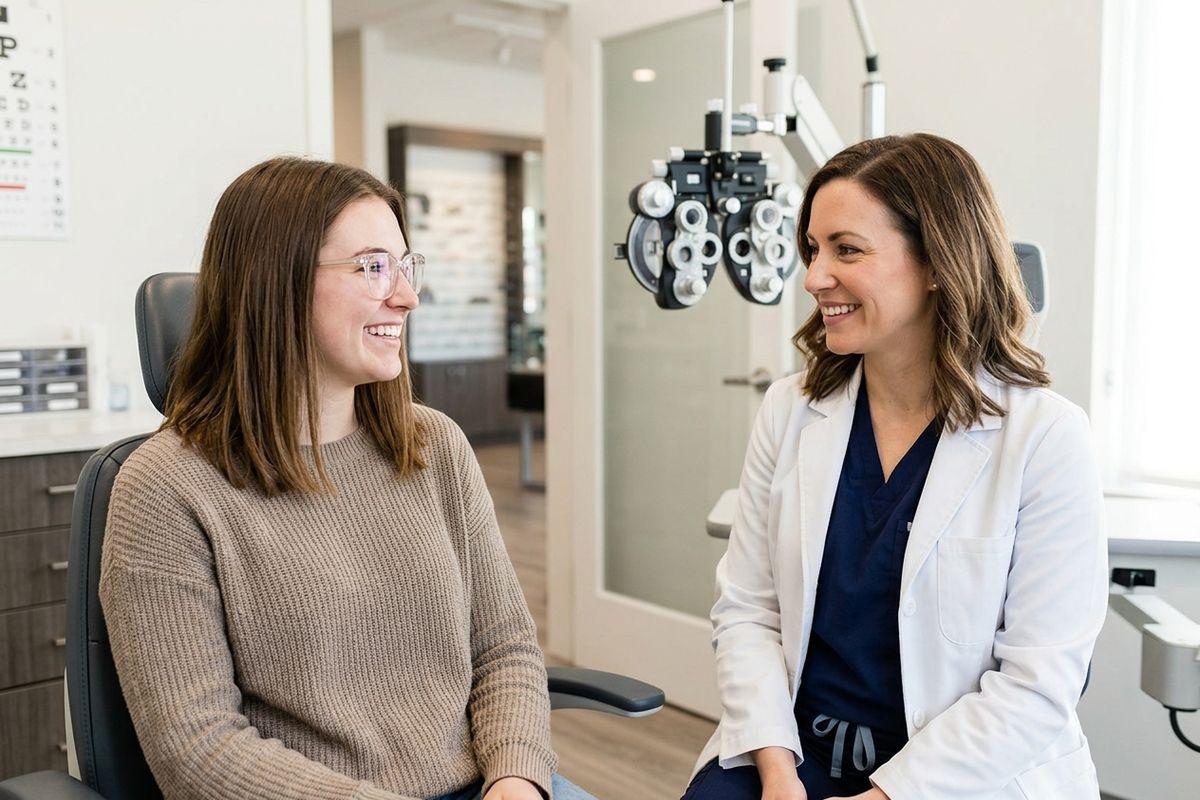
Some prescriptions and eye conditions require more specialized knowledge when choosing lenses. Progressive and bifocal lenses, stronger prescriptions, and other complex lens needs require careful consideration and precise fitting from an optician and/or optometrist.
Your ocular health can also play an important role in determining which lenses are most appropriate for you. Because your prescribing optometrist is familiar with your eye health and visual needs, they can consider the bigger picture when recommending lenses—not simply the numbers on your prescription. Your optician can then help with the precise measurements, frame selection, and lens options needed to achieve the best possible fit and visual performance.
Help Doesn’t Stop at Checkout
Your relationship with your optometry team doesn’t end at the counter. Support sticks around long after you’ve paid.
Quick Adjustments and Repairs
Glasses can loosen or slip after weeks of wear. Stop in for an on-the-spot tweak and get the fit back. Bring in minor repairs too, so you’re not stuck squinting through a wobbly frame.
Making Sense of Insurance and Warranties
Vision benefits can feel confusing when you’re trying to figure out what’s covered. Ask your optical team to walk you through your plan, so you actually use what you’re paying for.
Something goes wrong with your glasses? Lean on us to help you through a warranty claim.
Your Ocular Health and Your Glasses, Together
Choosing the right glasses is about more than simply matching a lens to your prescription. Your prescribing optometrist understands your ocular health, visual needs, and any conditions that may influence your vision. This information can play a major role in determining which lens options will help maximize your vision and provide the comfort you need throughout the day.
For patients with complex prescriptions or specific ocular health considerations, working with an optometrist and/or optician who understands your individual needs can make a meaningful difference. From lens design and materials to precise measurements and fitting, your eyewear can be selected with the full picture of your eye health in mind.
Keeping your eye care and eyewear connected means the professionals helping you choose your glasses have the information they need to make recommendations that are personalized to you—not simply based on your prescription numbers.
Ready to See Clearly? Let’s Find Your Next Pair
Glasses shouldn’t be a guessing game, and you shouldn’t have to choose between good style and a good fit. Book an eye exam with the team at Clarity Optometry & Vision Care, and pick out frames that match your prescription and your life in the same visit.
Book your appointment today and find frames that actually work for you.