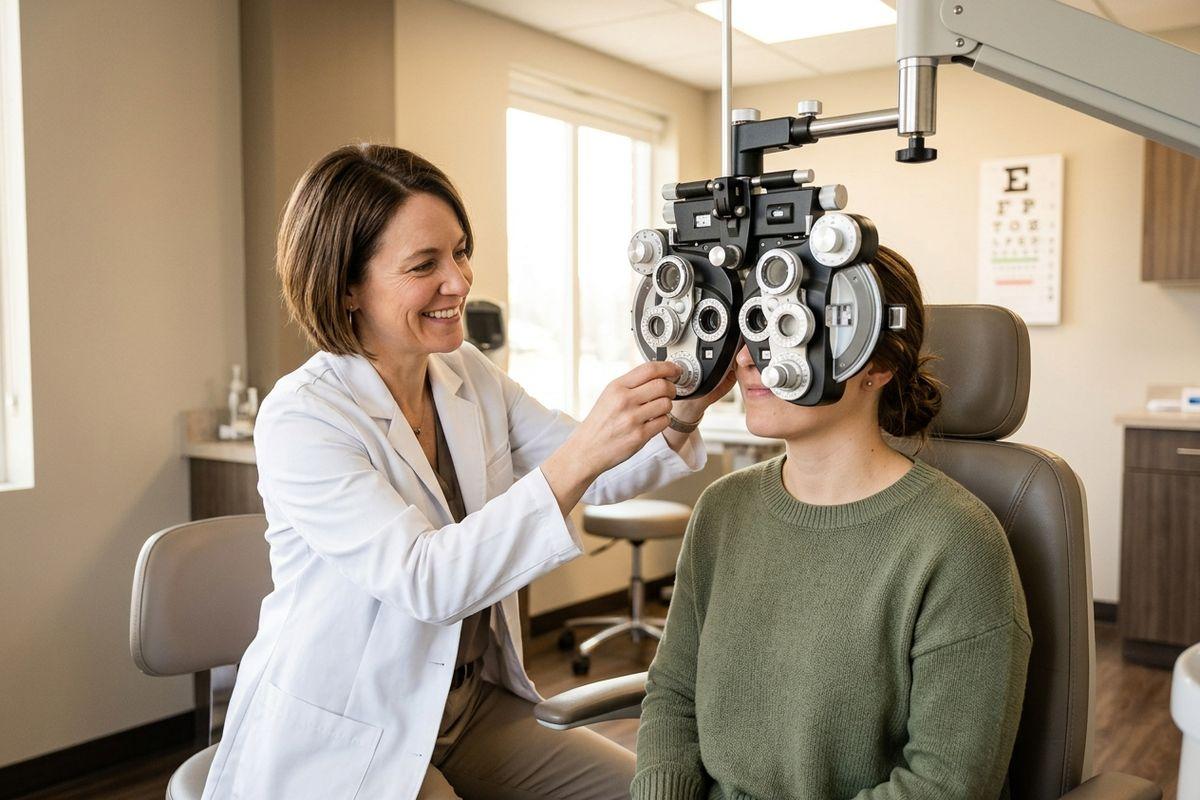
Your eyes get you through long study sessions and busy mornings with the kids, usually without asking for much in return. So booking an eye exam tends to slide down the to-do list until reading gets harder or headaches start turning up.
Plenty of the students and families we see tell us they waited longer than they meant to. Most adults do well with an exam every 1 to 2 years, while children and adults 65 and older usually benefit from a yearly visit. Your age sets the baseline, and your health history can move that timeline in either direction.
Why Regular Eye Exams Matter
Many eye conditions develop slowly and without pain, which means symptoms don’t always show up early. You could be seeing well while something changes inside the eye.
Regular visits give your optometrist the chance to spot those changes while there’s still room to act. Early detection can protect your vision and keep small concerns from becoming bigger ones.
The right schedule also depends on where you are in life. A student reading until 2 a.m. uses their eyes differently than a parent chasing a toddler around the house.
How Often Children and Teens Need Eye Exams
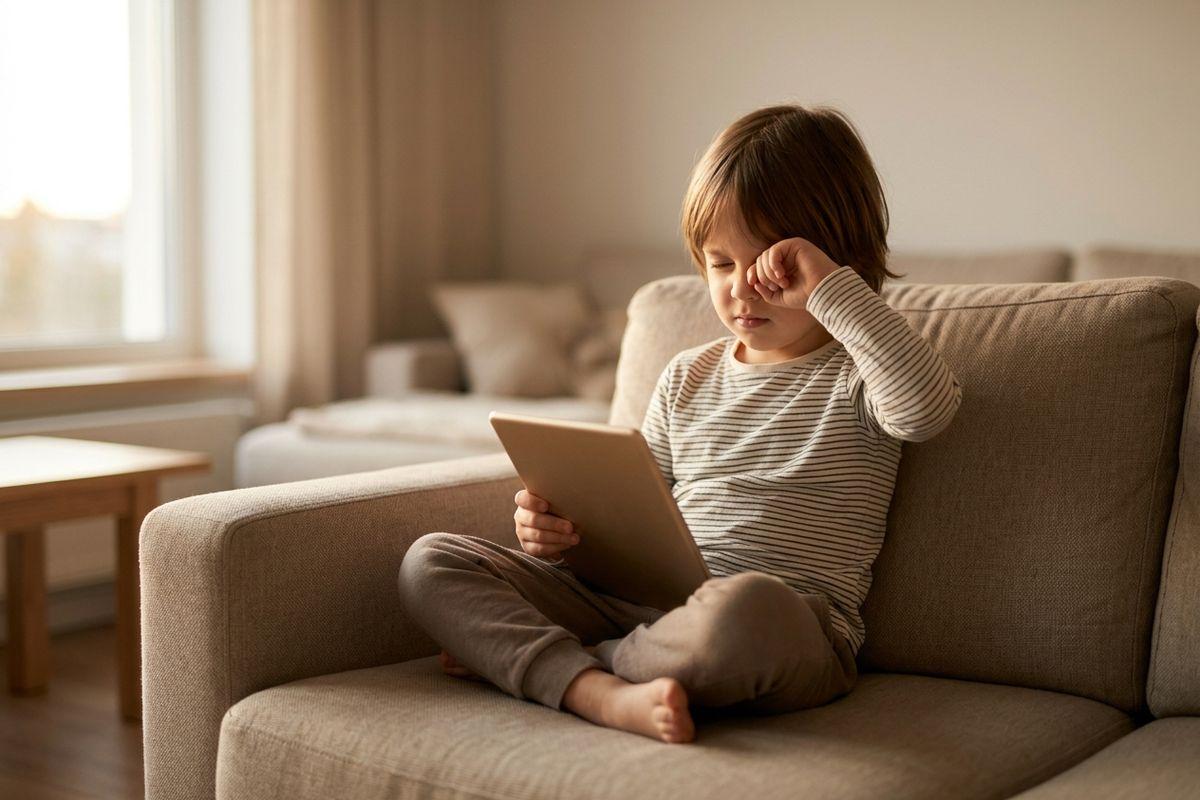
Young eyes change quickly, and kids rarely mention it when something looks off to them. They assume everyone sees the way they do.
Book a first exam between 6 and 9 months old to set an early baseline. Children benefit from another exam between ages 2 and 5, then a yearly visit from ages 6 to 19 as schoolwork picks up. In Ontario, provincial health coverage includes one exam a year for kids and teens under 20.
Between visits, watch for a few habits that can point to a vision problem:
- Sitting very close to the TV or holding a tablet near the face
- Squinting or tilting the head to see something across the room
- Losing their place or using a finger to track words while reading
- Complaining of headaches near the end of the school day
How Often Adults Need Eye Exams
Once you’re out of school, exams tend to get forgotten until your prescription stops working. Here’s the general schedule for adults with no added risk factors:
- Ages 20 to 39: every 2 to 3 years
- Ages 40 to 64: every 2 years
- Ages 65 and older: once a year
Your 40s tend to be when near vision starts changing and small print gets harder to read within arm’s length. That’s a normal part of aging, and a current prescription can make it much less annoying.
When You May Need Eye Exams More Often
Some situations call for more frequent visits. Tell us if any of the following apply to you, and we can suggest a schedule that fits:
- Diabetes, which calls for a yearly exam
- Wearing glasses or contacts, since prescriptions can change without you noticing
- A family history of glaucoma or macular degeneration
- Medications that can affect the eyes, including long-term steroid use
- A strong nearsighted prescription, which raises the risk of retinal problems
What Happens During Your Eye Exam
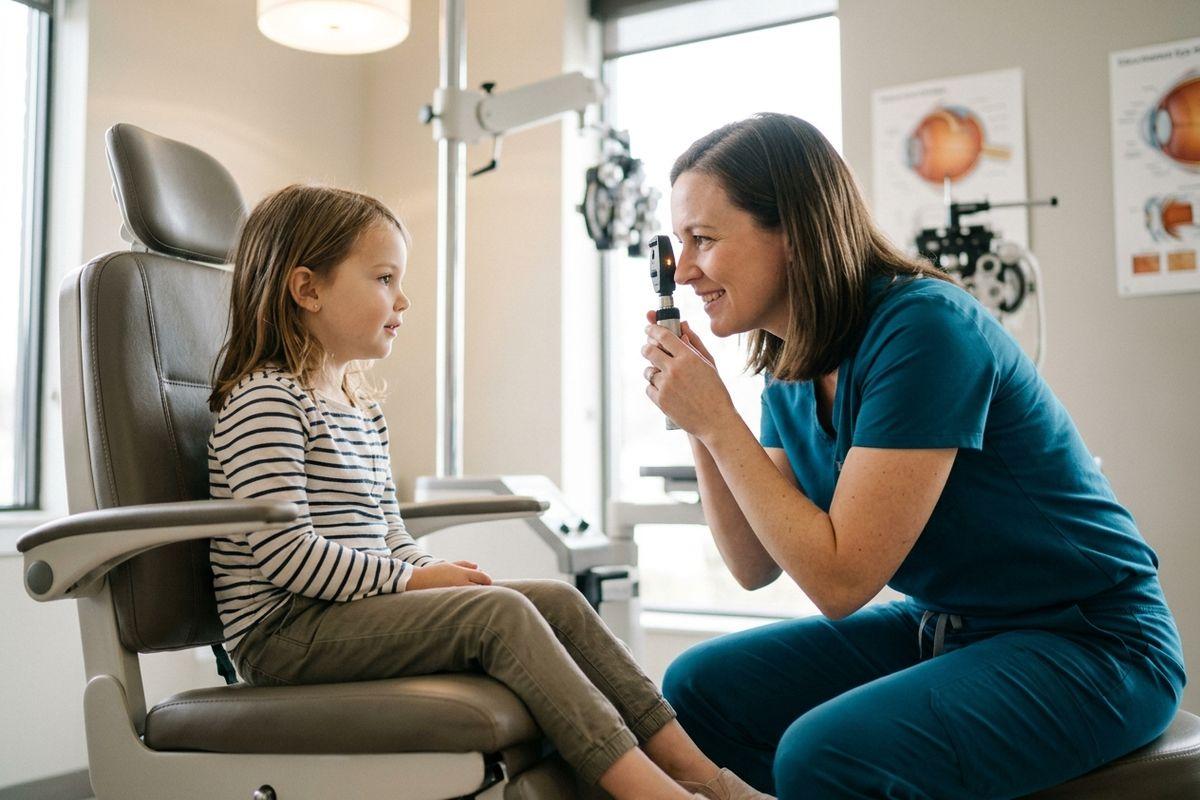
A visit covers a lot more than reading letters off a chart. We start with your medical and family history, which helps us know what to watch for throughout the exam. Vision testing comes next. We check whether glasses or contacts could sharpen your vision.
From there, digital imaging gives us a closer look inside the eye. A scan of the retina shows the layers at the back of your eye in detail, and an eye pressure reading helps us look for signs of glaucoma.
Conditions the Team Looks For
Blurry vision is only one of the things we’re looking at during your appointment. An exam can also turn up early signs of several eye diseases:
- Glaucoma
- Cataracts
- Macular degeneration
- Diabetic retinopathy
Your eyes can hint at what’s happening elsewhere in your body, too. Changes in the blood vessels of the retina sometimes point to high blood pressure, high cholesterol or diabetes before anything else does.
Simple Ways to Care for Your Eyes Between Exams
What you do day to day still counts. A few small habits can help keep your eyes comfortable until your next visit.
Screens ask a lot of your eyes, so try the 20-20-20 rule. Every 20 minutes, look at something 20 feet away for 20 seconds. Blinking fully during those breaks can help too, because we blink far less when we’re focused on a screen.
Bring sunglasses that block UV rays when you go outside, even when the sky is grey. UV exposure adds up over the years.
Leafy greens, fish and fresh fruit can support long-term eye health. And if your eyes feel dry by evening, ask us which drops could work for you.
Book Your Next Eye Exam
Maybe your last exam was a year ago, or maybe you’ve lost track. Either way, a visit can tell you where your vision stands and what’s worth watching.
Our team at Clarity Optometry & Vision Care cares for patients of all ages, from toddlers coming in for the first time to grandparents keeping tabs on their sight. Book your next eye exam and we can find out how your eyes are doing together.